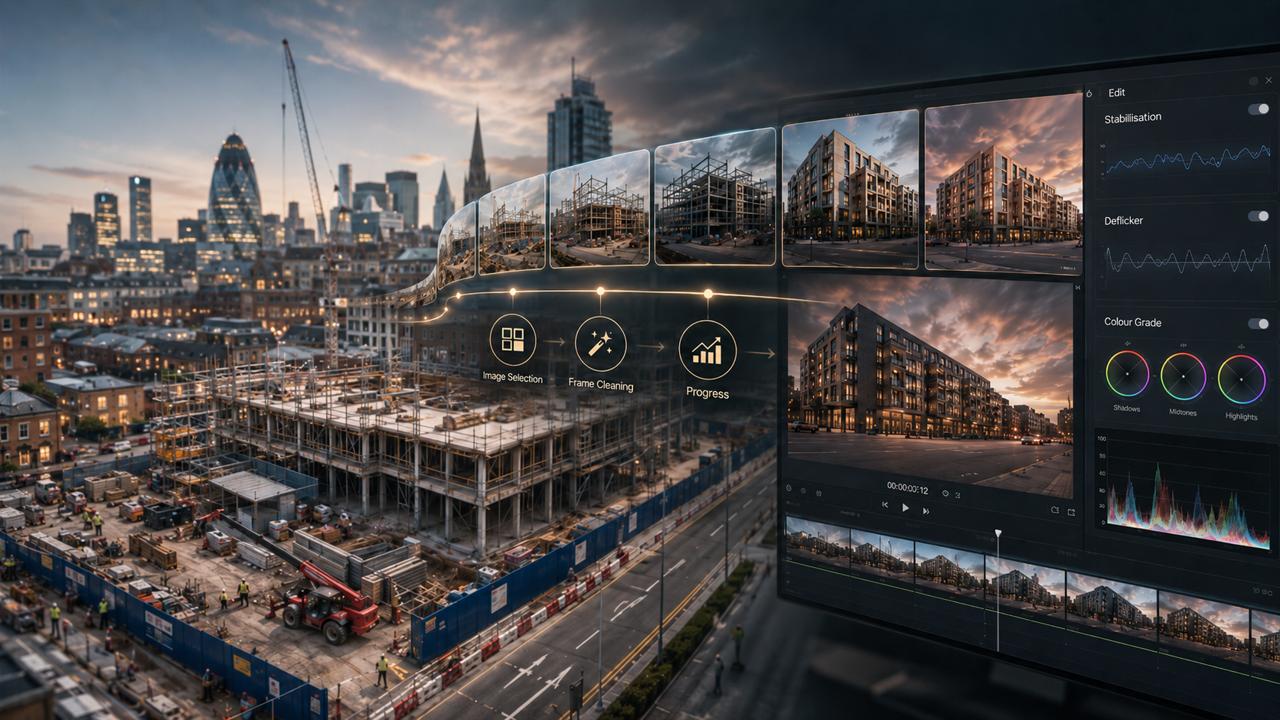
A good construction time-lapse film should look effortless. The building rises, the site changes, the weather moves across the frame, and months or years of work become clear in just a few minutes.
Behind that simple result is a careful technical and creative process.
Construction time-lapse is not just about collecting thousands of images and placing them on a timeline. Long-term projects bring many challenges: changing light, bad weather, dust, rain on the lens, camera vibration, seasonal shifts, quiet periods on site, sudden bursts of activity and different stages of construction that all need to feel part of one coherent story.
Our role is to turn that raw visual archive into a polished film that feels smooth, useful and professional — whether it is used on a website, in a project presentation, for investor updates, in a tender, or as a final marketing film after completion.
Here is how we create high-quality time-lapse films for construction and property projects.
1. We Start With the Story of the Project
Every strong time-lapse film starts before the edit.
A construction site can be filmed in many ways, but not every sequence tells the right story. Before creating the final film, we look at the project itself: what is being built, which stages matter most, who the film is for, and how it will be used.
A film for a developer’s website may need to feel elegant and accessible. A film for a contractor’s capability presentation may need to show scale, sequencing and technical delivery. A stakeholder update may need to focus on progress and key milestones. A final project film may need to combine documentation, atmosphere and brand value.
This helps us decide what to emphasise:
- groundworks and foundations;
- structural frame;
- façade installation;
- fit-out;
- external works;
- logistics and site activity;
- skyline or public realm changes;
- completion shots;
- key milestones.
The aim is not simply to show everything. The aim is to show the right things clearly.
2. We Work From a Structured Visual Archive
A high-quality time-lapse film depends on the quality of the archive behind it.
Over a long-term construction project, the camera may capture thousands or even millions of images. These images need to be organised, reviewed and prepared before editing begins. A clean archive allows the production team to find important dates, compare stages, remove irrelevant periods and build a film around real project progress.
This is where professional time-lapse differs from a simple camera recording.
We can work with:
- high-resolution image sequences;
- daily, weekly and monthly progress material;
- selected milestone dates;
- multiple camera viewpoints;
- drone panoramas or additional media;
- live view screenshots or archive images;
- weather and project context where relevant.
This gives the editor more control. Instead of forcing the footage into a generic sequence, we can shape the film around the rhythm of the project.
3. We Clean the Image Sequence Before Editing
Raw construction time-lapse material is rarely perfect from start to finish.
Outdoor cameras work through rain, wind, dust, low winter light, bright summer sun, fog, shadows, reflections and changing site conditions. Some frames may include raindrops on the lens, temporary obstructions, exposure jumps, glare, or moments when visibility is poor.
Before the creative edit begins, we review and clean the sequence.
This can include:
- detecting and removing unusable frames;
- correcting exposure changes;
- reducing visual jumps between images;
- removing short interruptions where possible;
- selecting the clearest periods of activity;
- balancing day and night material;
- preparing the image sequence for smooth playback.
This stage is important because a time-lapse film is very sensitive to small problems. A single bad photo may pass unnoticed in a gallery, but in a moving sequence it can create a visible flash, jump or distraction.
Good post-production protects the viewer’s attention.
4. We Stabilise the Footage for a Professional Result
Even when a camera is securely installed, long-term time-lapse can still be affected by small movements. Wind, vibration, maintenance work, bracket movement or seasonal changes can slightly shift the frame over time.
In a normal photo archive, these shifts may not matter. In a time-lapse film, they can make the image feel unstable.
We apply stabilisation to keep the sequence steady and comfortable to watch. The goal is not to make the film feel artificial. The goal is to remove distracting movement so the viewer can focus on the construction progress.
This is especially important for long-term UK projects, where cameras may remain on site through changing weather, winter conditions and many months of site activity.
A stable image immediately makes the final film feel more professional.
5. We Smooth Brightness and Reduce Flicker
Flicker is one of the most common problems in time-lapse production.
It happens when brightness changes too quickly between frames. Clouds move across the sun, the camera adjusts exposure, shadows shift, lights switch on and off, or the weather changes suddenly. In a photo sequence, these changes are natural. In a fast-moving film, they can create a distracting pulsing effect.
We use deflicker and brightness smoothing techniques to make transitions feel more natural.
The point is not to remove real changes in light. A construction time-lapse should still show the atmosphere of the project: mornings, evenings, clouds, rain, winter light and summer skies. The aim is to reduce the harsh, high-frequency flicker that makes a film feel unfinished.
When brightness is smoothed properly, the film feels calmer, cleaner and more cinematic.
6. We Grade the Film With a Natural Cinematic Look
Colour is not just decoration. It affects how professional the project feels.
Construction sites can be visually challenging: grey concrete, reflective surfaces, harsh midday light, dark shadows, safety colours, changing weather and mixed artificial lighting. Without careful colour work, a time-lapse film can feel flat, inconsistent or too harsh.
We grade the film to create a polished but natural look.
For UK construction projects, we usually avoid an exaggerated style. The image should feel premium, clear and trustworthy. We focus on:
- balanced contrast;
- natural skin tones where people appear;
- clean whites and realistic greys;
- controlled highlights;
- richer skies without making them look artificial;
- consistent colour from one stage to the next;
- a look that suits the client’s brand.
The best colour grade should not draw attention to itself. It should make the project look clear, well presented and professionally delivered.
7. We Shape the Edit Around Progress, Not Just Speed
A time-lapse film should not feel like a random rush through months of images.
The edit needs rhythm. Some stages should move quickly. Others deserve more time. A structural frame going up may be visually powerful and worth holding. A long quiet period may need to be compressed. A key milestone may need a short pause, a title, a closer crop or a different camera angle.
We shape the film so the viewer can follow the project without feeling overwhelmed.
This can include:
- choosing the best start and end points;
- adjusting speed between stages;
- cutting between multiple viewpoints;
- using milestone titles where helpful;
- combining wide site views with closer details;
- adding drone footage or final photography;
- matching the edit to music or voiceover;
- creating a clear beginning, middle and end.
The result is a film that feels intentional rather than automatic.
8. We Prepare Versions for Different Uses
One construction time-lapse film can support many communication needs, but different platforms need different versions.
A website hero video should be short, clean and visually immediate. A LinkedIn post may need a faster edit with captions. A stakeholder presentation may need a clearer project timeline. A tender film may need to show capability and scale. A final project film may need a more polished cinematic finish.
That is why we can prepare different outputs from the same archive, such as:
- full project films;
- short website videos;
- social media clips;
- progress update videos;
- investor presentation edits;
- tender and capability videos;
- vertical or square formats;
- high-resolution stills from the archive;
- final completion reels.
This makes the time-lapse archive work harder. It becomes more than one finished video — it becomes a content source for the whole project.
Why the Process Matters
A high-quality time-lapse film is the result of many small decisions.
The camera needs to capture the project reliably. The archive needs to be organised. The image sequence needs to be cleaned. The footage needs to be stabilised. Flicker needs to be reduced. Colour needs to be balanced. The edit needs to follow the story of the project.
When these steps are handled properly, the final film feels smooth, clear and professional. It helps clients, investors, consultants and marketing teams understand the work without needing a long explanation.
For construction and property companies, this matters because the film often becomes part of the project’s public record. It may appear on the website, in presentations, at events, in bids, on social media and in conversations with future clients.
A Film That Shows the Work Properly
Construction time-lapse is most effective when it respects both sides of the project: the technical record and the visual story.
It should show what happened on site, but it should also feel good to watch. It should be accurate enough for project communication and polished enough for marketing. It should make progress easy to understand without turning the project into something artificial.
That is the balance we aim for in every film.
From raw image sequences to final edits, our process is designed to make construction progress clear, stable, cinematic and useful across every stage of communication.