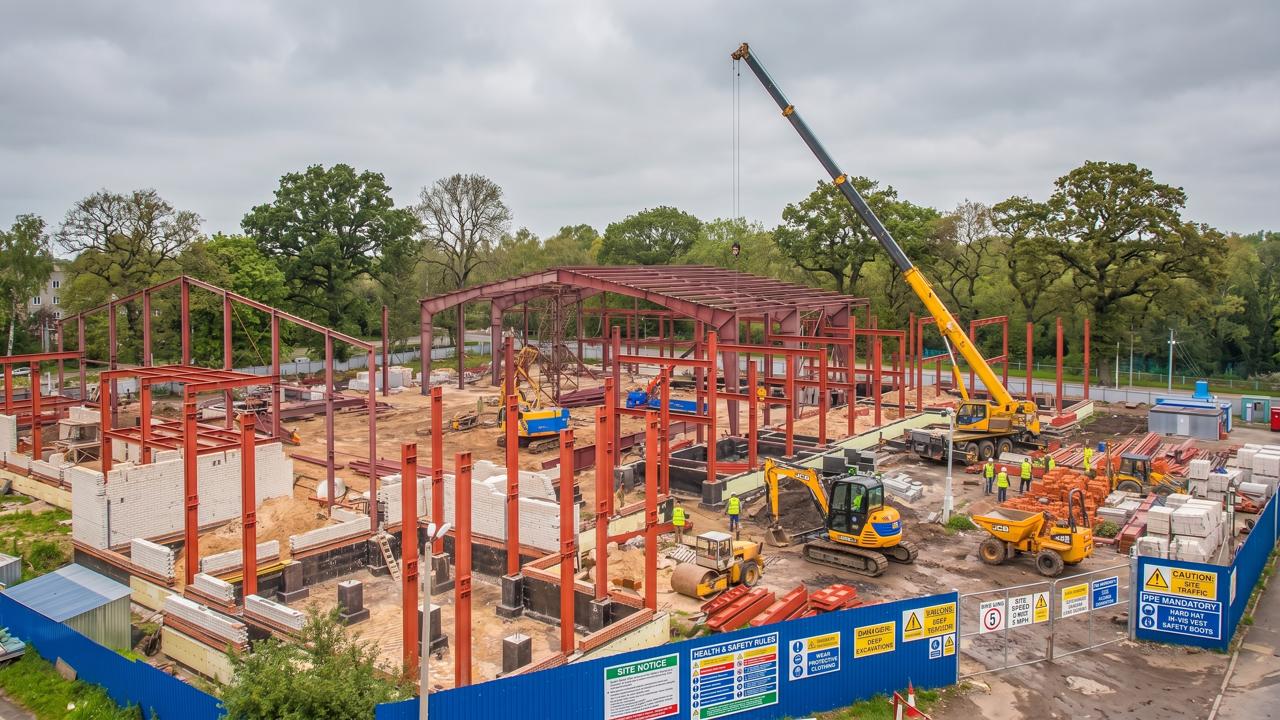
For many construction and property companies, a website is still treated as a static portfolio: finished projects, computer-generated images, a few case studies and a contact form.
That is useful, but it does not show the most interesting part of the work — the project coming to life.
Construction time-lapse video, live site views and visual progress updates can turn a standard website into a much more active communication tool. Instead of only showing what has already been completed, your website can show what is happening now, how the project is developing, and the quality of work behind each stage.
For UK developers, contractors, consultants and property teams, this can be especially valuable. A project website is often visited by clients, investors, funders, future occupiers, local stakeholders and internal teams. Giving them clear visual access to progress helps build confidence without adding more meetings, reports or manual updates.
Below are three practical ways construction time-lapse content can make your website more useful, more engaging and more credible.
1. Use Time-Lapse Videos to Make Project Progress Easy to Understand
Construction projects are complex, but people respond quickly to visual stories.
A time-lapse video can compress weeks, months or even years of work into a short, clear sequence. It shows the site changing over time: groundworks, foundations, structure, façade, fit-out and completion. For someone outside the project team, that is much easier to understand than a technical report or a set of still images.
This is where time-lapse works particularly well on a website.
A short project video can be placed on:
- the homepage;
- a project landing page;
- a case study;
- an investor update page;
- a news article;
- a tender or capability page;
- a dedicated project microsite.
The benefit is not only visual appeal. A good time-lapse video helps visitors understand scale, momentum and delivery capability. It shows that the project is real, active and professionally managed.
For developers, this can support sales and investor confidence. For contractors, it can demonstrate capability and delivery experience. For consultants and project teams, it can make complex work easier to explain to non-technical audiences.
The strongest results come when time-lapse is not treated as one final video at the end of the project. Daily, weekly and monthly edits can create a regular stream of content throughout the build. This keeps the website current and gives marketing and communications teams something useful to share without starting from scratch every time.
2. Add Live Site Views to Build Transparency and Trust
A live site view can make a project website feel active rather than static.
Instead of telling visitors that work is progressing, you can show it. A live construction camera or embedded viewing window gives selected audiences access to the site in real time or near real time, depending on the project’s privacy and access settings.
This does not mean every project needs to be fully public. Access can be controlled. Some live views may be embedded on a public website, while others can be shared privately with clients, investors, funders, consultants or internal stakeholders.
Used carefully, live site content can support:
- client updates;
- investor confidence;
- community engagement;
- internal progress reviews;
- stakeholder reporting;
- marketing campaigns;
- project transparency.
For public-facing or high-value projects, live visual access can be a simple way to reduce uncertainty. People do not need to wait for the next newsletter or meeting to see that work is moving forward. They can check the project page and see the site for themselves.
A live view also gives the website a practical reason for repeat visits. Instead of being a brochure that people visit once, the project page becomes a place stakeholders return to throughout the build.
3. Turn the Website Into a Visual Project Archive
One of the most overlooked benefits of construction time-lapse is the archive behind the video.
A professional time-lapse system does not only create a final film. It captures a structured visual record of the project over time. When this archive is connected to a website or online portal, it becomes a useful resource for communication, reporting and marketing.
Project teams can use selected images and videos to show:
- how the site looked at a specific date;
- how one construction stage compared with another;
- how weather or site conditions affected progress;
- how the building developed from early works to completion;
- which milestones have been reached;
- what material can be used for PR, social media or presentations.
For a website, this opens up more possibilities than a single embedded video. You can create a project gallery, publish monthly progress updates, add milestone articles, build a visual case study or prepare content for future campaigns.
This is particularly useful for long-term construction projects. Over time, the website can become a living record of the build rather than a page that only changes at the start and the end.
It also helps marketing teams. Instead of asking site managers for photos, searching through phone images or relying on occasional drone shoots, they can work from a clean, organised visual archive. The best images and clips are already there, ready to be used.
Why This Matters for Construction Marketing
Construction marketing is often expected to do a difficult job: communicate technical progress, build trust, support sales, keep stakeholders informed and create attractive content from a project that may still be behind hoarding or closed to the public.
Time-lapse content helps solve this because it is both practical and visual.
It can support marketing, but it can also support reporting. It can make the website more engaging, but it can also make project communication clearer. It can create polished final videos, but it can also provide everyday visual updates during the build.
That combination is what makes time-lapse useful for modern UK project teams. It is not just content. It is a simple way to connect the construction site with the people who need to understand it.
Practical Website Uses for Construction Time-Lapse
A well-managed time-lapse system can provide content for many parts of a website, including:
- homepage hero videos;
- project landing pages;
- live site windows;
- monthly progress updates;
- investor and stakeholder pages;
- case studies;
- project galleries;
- news posts;
- recruitment and employer brand pages;
- ESG or community engagement updates;
- tender and capability sections.
The same content can also be reused across LinkedIn, YouTube, newsletters, sales presentations, public consultations and post-completion PR.
This makes the investment work harder. One camera and one visual archive can support many communication needs across the life of the project.
A More Useful Project Website
A construction website does not have to wait until the project is complete to become valuable.
With time-lapse video, live site views and a structured visual archive, it can show progress as it happens, give stakeholders a clearer view of the work, and provide marketing teams with a steady flow of useful content.
For UK construction and property companies, this is a practical way to make the website more current, more transparent and more useful throughout the whole project.
The project is already changing every day. Time-lapse simply gives your website a better way to show it.